This is a (hopefully) a series trying to trace the forms of the School of Central Equilibrium back through Taiji history using resources usually books from past practitioners (in my fathers library) which are written in Chinese. This is a process that is helping me understand the form, the style we practice and the changes through the years, answering some questions and hopefully helping future practitioners in the art.
The Cheng Man Ching 37 Short form –
If you have practiced in our system (and in other ones who have lineages under Professor Cheng Man Ching) this would be the first form you start learning. According to my father Jin, Cheng Man Ching created the short form for health. By reducing the number of movements from the Long Form the idea was to make it easier to learn the core concepts of Taiji and get more people to practice the art. It always struck me as strange that it was called the ‘37 Short form’ as it always felt like we did more than 37 moves within the form. I also felt that as I was starting to teach the form I wanted to have a resource to give to students. These resources had already existed in various forms, created by other instructors, but I wanted a version that had the original Chinese text (It is always important to keep and have the original source as it is easy for things to get lost in translation) and to make sure that what we had linked up to the original form Cheng Man Ching created. In order to reconcile this, I dug through the archives…
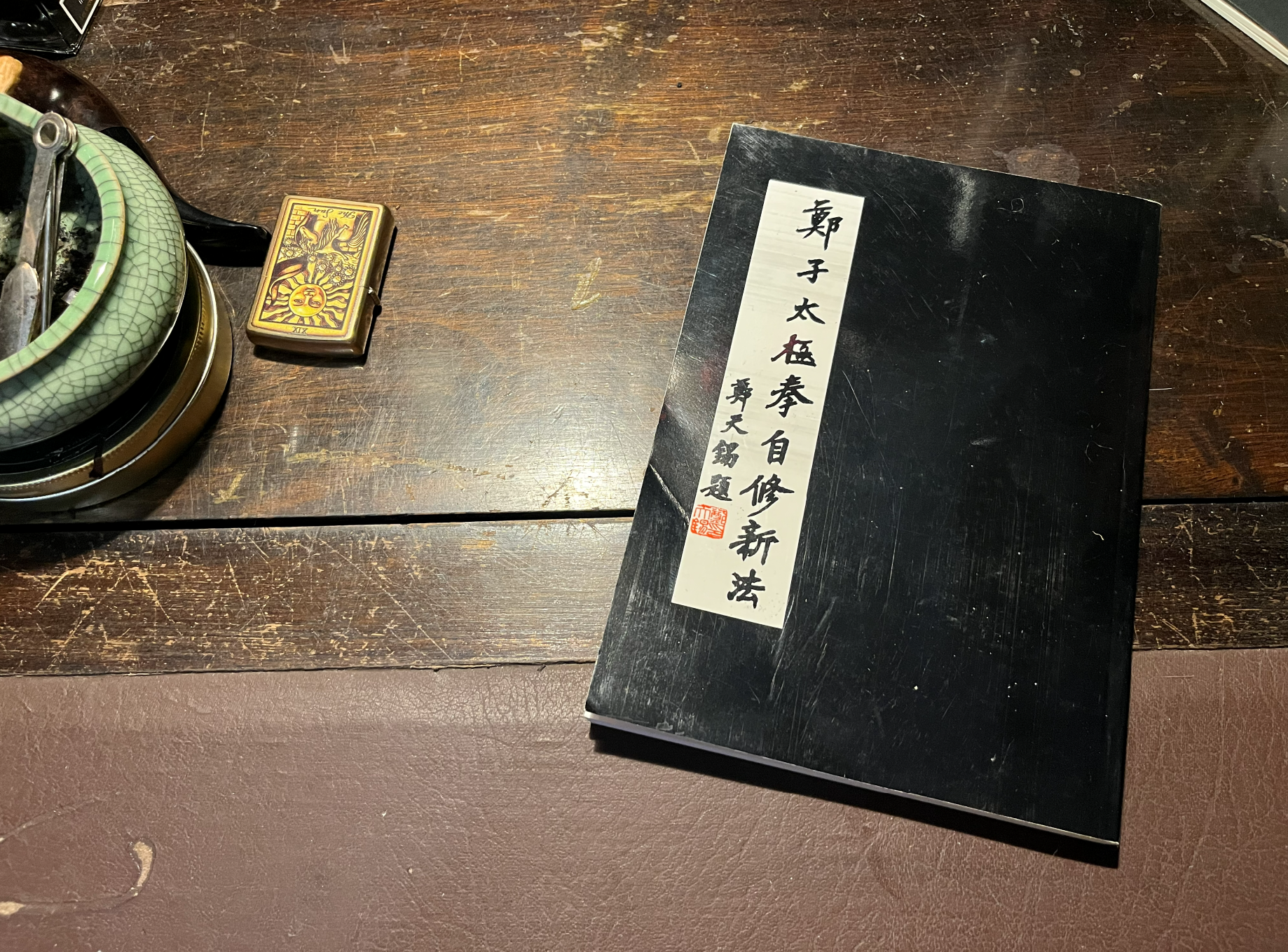
Book: Cheng’s New Method for Taiji Self Cultivation (郑子太极拳自修新法)
Enter the book written by Cheng Man Ching (title as above). This book was first published in 1948 although I believe the copy that we have is a reprint from the 70’s or 80’s. Admittedly, I have not completely read this book yet (my Chinese is not great so progress is slow). But this book contains Cheng’s explanation of the Taiji Classics, other various essays and diagrams on Taiji and lastly a breakdown of the postures in the form.
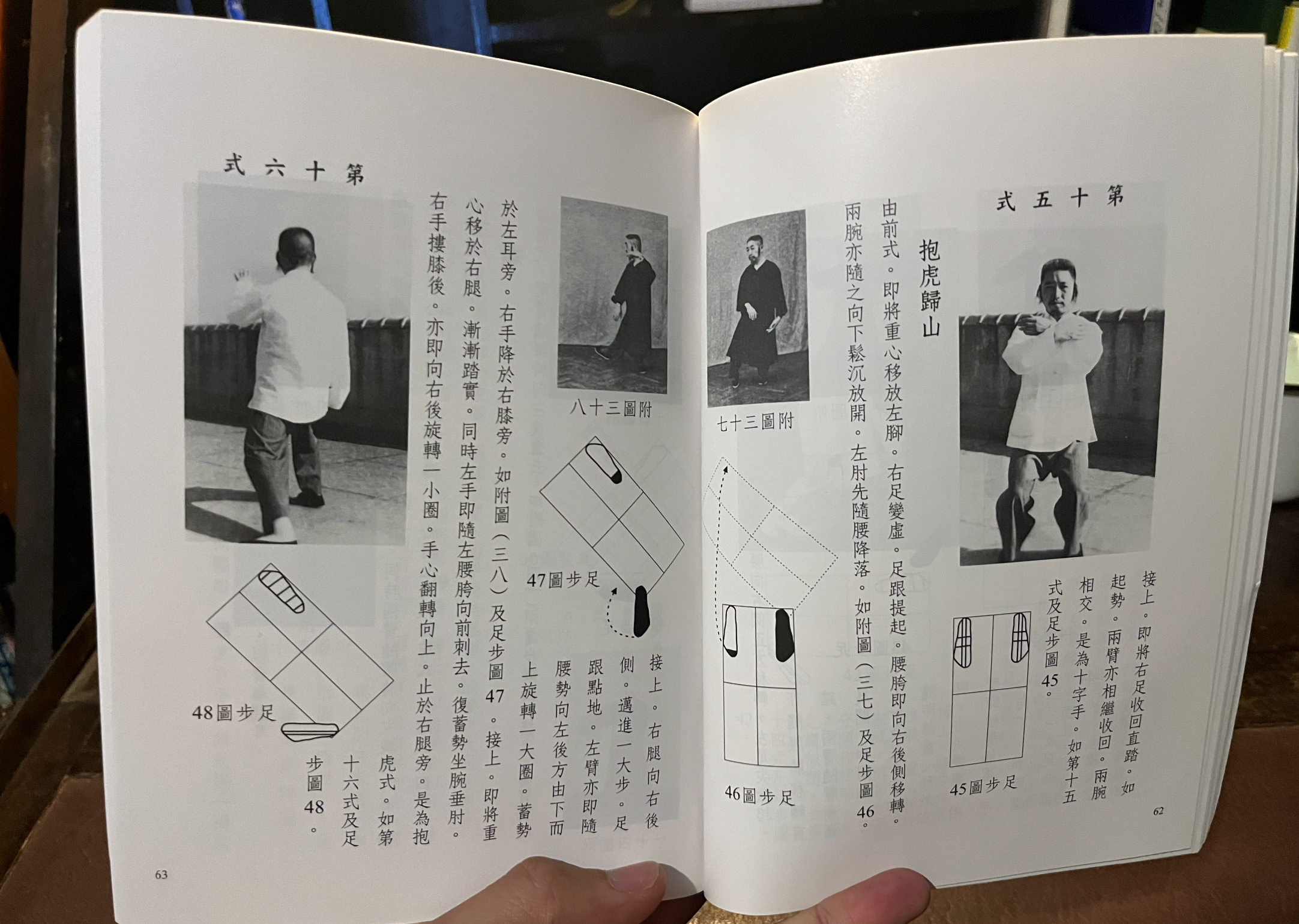
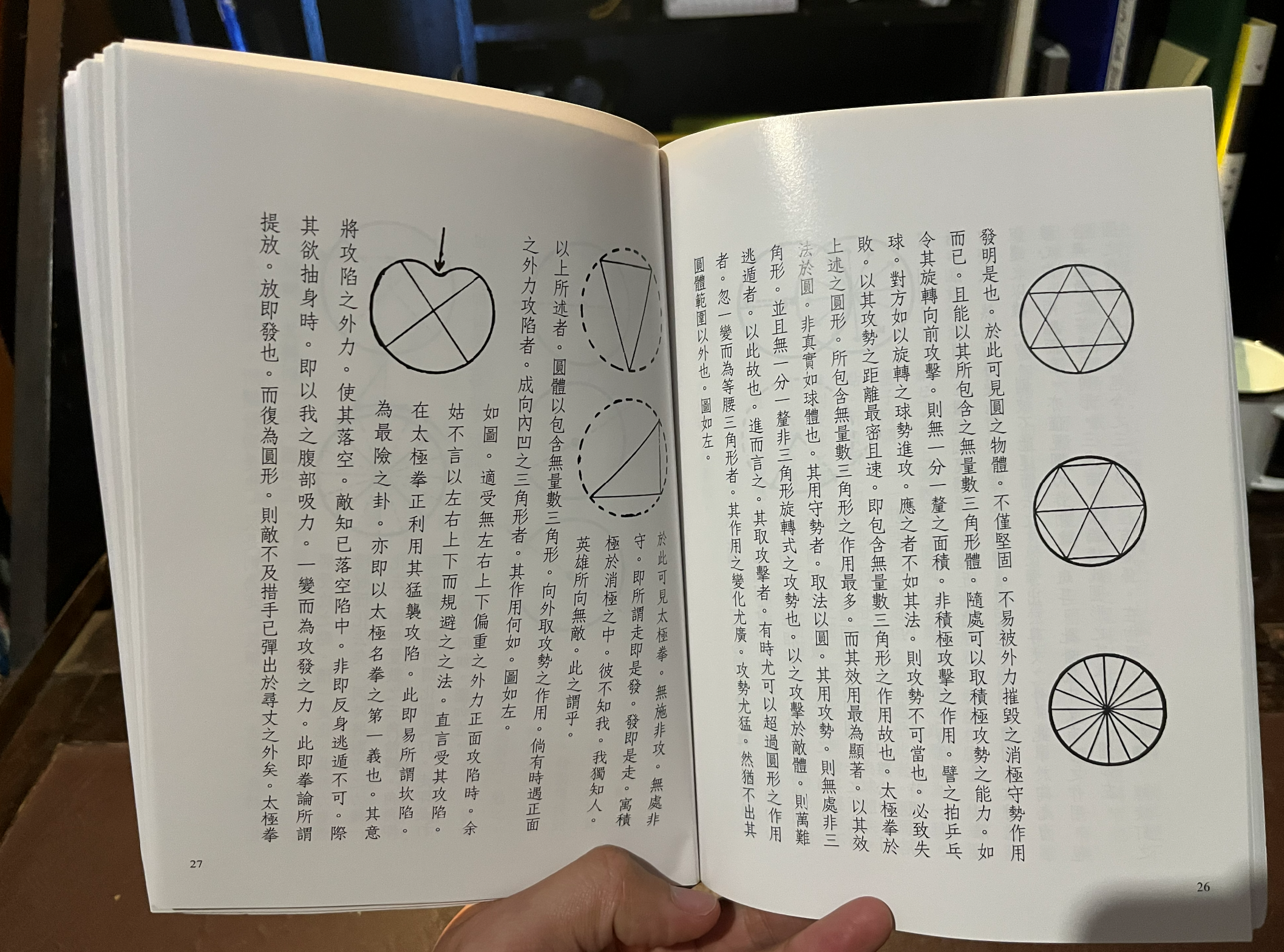
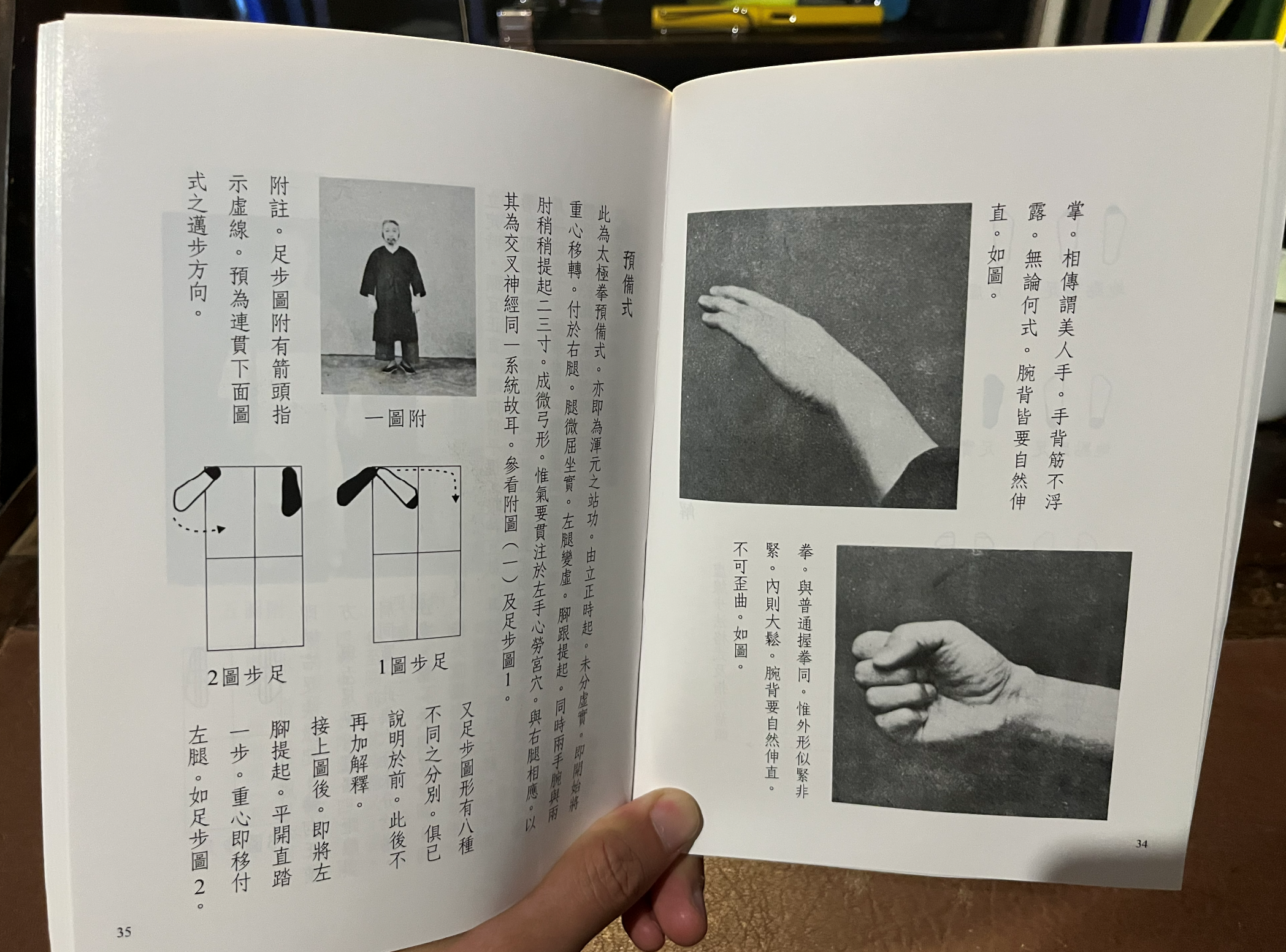
I could go on about all the interesting aspects of this book but it would be another article. However, for those who are interested, there seems to be someone who has scanned the whole text here. Otherwise you can also check the second half of the book (titled ‘Cheng Tzu’s Thirteen Treatises on T’ai Chi Ch’uan’) which has been translated into english by his student Ben Lo.
This book was a treasure trove for linking the form back to Cheng’s original short form. From this I was able to reconcile the moves in our form with the original in Cheng’s. Some interesting insights from my study:
For the most part, only new moves were counted and when it repeated it was not counted in the 37.
Moves that have many repeats e.g. repulse monkey, cloud hands were only counted as moves once on the left and once on the right.
“Extra” move we have in our system (High Pat on Horse) was not in the original 37 and was probably a transition that wasn’t named.
What we refer to as ‘Snake Creeps Down’ is referred to as ‘Single Whip Downward style’
‘Grasp the Sparrow’s Tail’ was sometimes counted, other times not and other times partially.
I found what is most likely a typo of a move in the book.
Overall, I am happy with how it has all connected back to the original Cheng Man Ching version. I have uploaded this reconciliation as a resource for those who are interested. Additionally, I have created another simpler version just as a tool for students to learn. If you wish to see these please go to the resources page of the website by clicking here.
- Andy